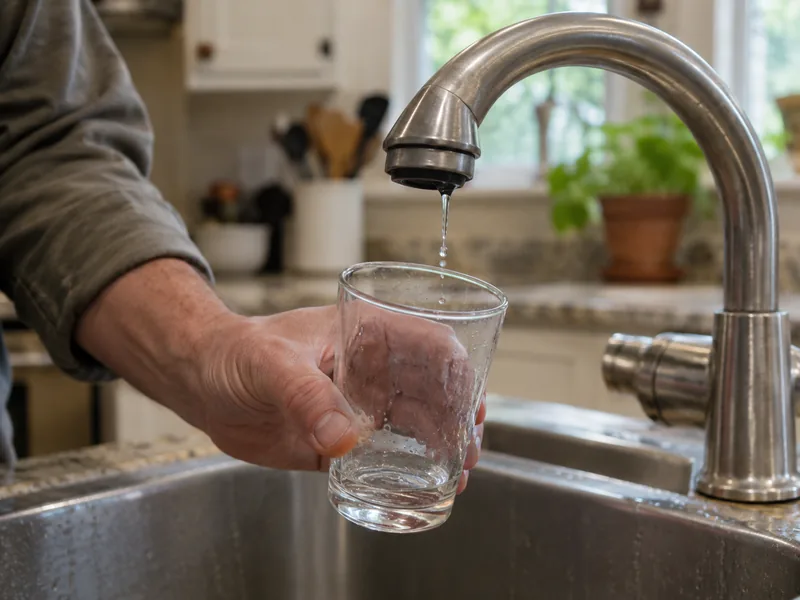
1. Water pressure is weaker than it used to be
Worn impellers lift less water at your pressure setting. If showers have slowly gotten weaker over months, the pump may be wearing out. A clogged filter or a mis-set switch can look the same, so check those first.
2. Pressure goes up and down while you use water
Pressure that swings quickly from strong to weak usually means the pressure tank has lost its air charge and the pump is short cycling. Fix it fast; short cycling kills pump motors. See short cycling repair.
3. The pump runs constantly
A pump that never reaches cut-out pressure is either worn out, leaking back down a split pipe, or pulling from a falling water level.
4. Sputtering faucets and air in the lines
Air usually means the water level in the well has dropped near the pump intake, or there is a hole in the drop pipe. Use as little water as possible until it is checked.
5. Sand, grit or muddy water
Sand points to a worn well screen or a pump set too close to the bottom. Sand also destroys impellers quickly.
6. A higher electric bill
A pump that runs longer to deliver the same water uses more power. A sudden jump with no other explanation is worth a check.
7. The breaker trips
A failing motor, damaged wire insulation or a bad start capacitor can all trip the breaker. Reset it once only.
8. Clicking, humming or grinding
Clicking at the switch means short cycling or pitted contacts. A humming control box means a failed capacitor or relay. Grinding from a jet pump means worn bearings.
9. The pump is over 15 years old
Age alone is not a failure, but an old pump with any of the signs above is near the end of its life. Plan a replacement before it fails on a holiday weekend.
What to do next
Write down what you see and hear, check the breaker and pressure gauge, and book a well pump inspection. Surface tests can tell whether the pump, the tank or the controls are to blame.