Safety first
Well pumps run on 240 volts. The pressure switch and control box have live terminals even when the pump is off. The steps below avoid live parts. Leave electrical testing and anything inside the well to a professional.
Step 1: Check the breaker
Find the double breaker labeled well or pump. If it is tripped, reset it once. If it trips again, leave it off. Repeated resets on a shorted motor can destroy it.
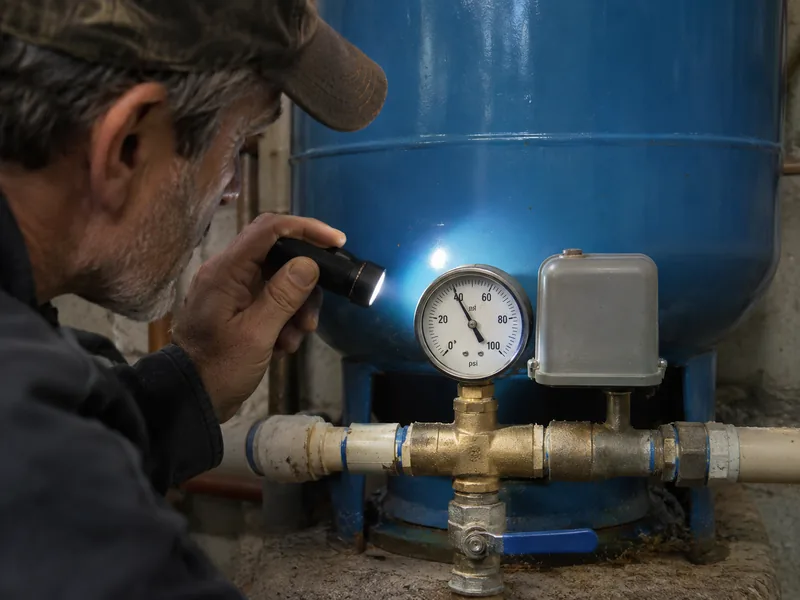
Step 2: Read the pressure gauge
- Zero and the pump is silent: power, switch or control box problem.
- Low and the pump is running: worn pump, leak or low water level.
- Swinging fast: waterlogged tank.
Step 3: Listen
A humming control box usually means a failed capacitor or relay. Rapid clicking at the switch means short cycling. Silence with power on can mean a failed switch.
Step 4: Look for leaks and open fixtures
A running toilet, a dripping outside spigot or an irrigation leak can keep the pump running. Close the valve after the tank; if pressure then builds, the leak is in the house.
Step 5: Check the tank air charge
Turn off the pump breaker, open a faucet to drain pressure, then check the tank air valve with a tire gauge. It should read about 2 PSI below the cut-in pressure. Water from the valve means a failed bladder.
Step 6: Call with good notes
Tell the technician what the gauge reads, what you hear, whether the breaker tripped and how old the pump is. Good notes mean the right parts on the truck. Start with our well pump not working service.