Well Inspection for Home Buyers and Sellers
A home inspector checks the house, but rarely the well. A dedicated well inspection tells buyers what they are getting and sellers what to fix before listing, with a report lenders and agents can use.
What well inspection for home sales involves
A failing pump or a contaminated well can cost thousands after closing. A well inspection checks the equipment, the yield and the water, and puts it all in a clear report with photos.
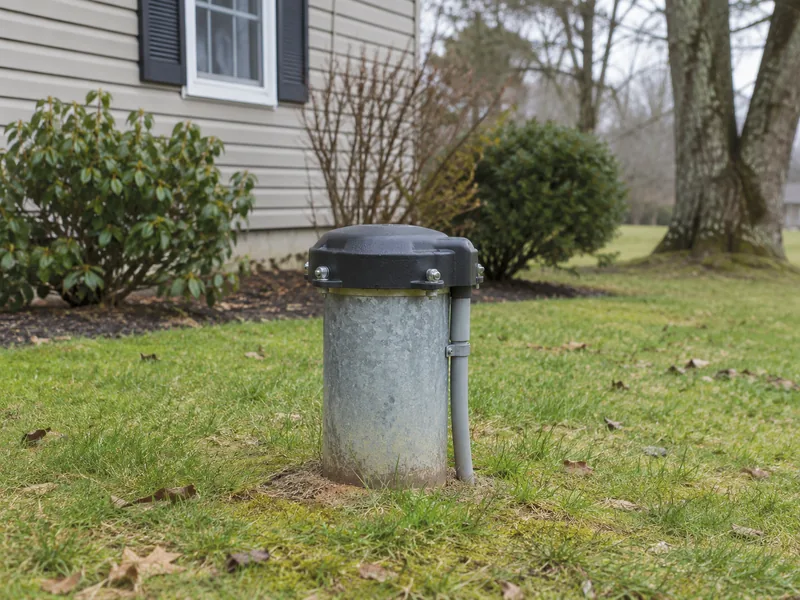
We inspect the well head, cap and casing, test the pump electrically, check the pressure tank and switch, run a flow test, and collect water samples for a certified lab. Common tests include coliform bacteria and E. coli, nitrates, and local concerns such as arsenic, radon or uranium.
Sellers can inspect before listing to avoid surprises. Buyers can schedule during the inspection period. We work around closing timelines.
Why buyers and sellers book this
- Lender requirementMany loans require flow and water tests.
- Unknown pump ageFind out what you are buying.
- Vacant homesWells that sat unused need checking.
- Old well constructionPits, buried caps and old casings.
- Water quality concernsBacteria, nitrates and local contaminants.
- Seller disclosureKnow the condition before listing.
What the inspection includes
A trained technician does the work and talks you through it. You get the price in writing before anything is replaced.
Well head inspection
Cap, seal, casing height and setback.
Pump and electrical
Motor tests, amp draw and controls.
Pressure system
Tank, switch, gauge and relief valve.
Flow test
GPM and drawdown measured.
Water sampling
Samples sent to a certified lab.
Clear report
Findings, photos and estimated repair costs.
Which water tests should a buyer order?
At a minimum, coliform bacteria and nitrates. Many areas also recommend arsenic, lead, radon, uranium, iron, manganese or hardness, depending on the local geology.
We recommend tests based on the region and your lender's requirements, and explain the results in plain language. Problems found can often be solved with well water treatment.
How a well inspection for home sales visit works
The same four steps on every job, from a quick switch swap to a 600-foot pump pull.
Call or book online
Describe the symptoms. We triage on the phone and load the truck with the parts they point to.
Test before touching
We check voltage, amps, motor resistance, tank charge and flow, and tell you what we find.
Price in writing
You get the diagnosis and a fixed price before we start. If you want to think it over, that is fine.
Fix, flush and verify
Repair completed, well disinfected after any pull, and the system cycled until pressure is steady.
Questions about well inspection for home sales
Does a home inspection include the well?
Usually not in detail. Most home inspectors recommend a separate well inspection.
How long does a well inspection take?
Usually two to three hours on site. Lab results take a few days.
Who pays for the well inspection?
Usually the buyer, though sellers sometimes inspect before listing.
What if the well fails inspection?
The report lists repairs and costs, which can be negotiated in the sale.
Do you test for PFAS?
We can collect samples for PFAS testing through a certified lab where needed.
Related work
One worn part often wears out the next. These jobs tend to come up alongside well inspection for home sales.
Well Flow & Yield Test
Measure how much water your well can supply, for sizing pumps, buying homes and lenders.
Learn moreWell Pump Inspection
A full checkup of pump, motor, wiring, tank and controls, with a written condition report.
Learn moreWell Water Treatment
Filters, softeners, UV and iron and sulfur systems chosen from a real water test.
Learn moreWell Shock Chlorination
Disinfection for bacteria, odors, floods and after pump work, with follow-up testing.
Learn moreWell Inspection for Home Sales near you
Need well inspection for home sales?
Tell us what the pump is doing. We will give you a likely cause, a price range and an arrival window on the first call.