Well Shock Chlorination and Disinfection
A positive bacteria test, a rotten-egg smell or a flooded well head all call for disinfection. We dose the well correctly, circulate chlorine through the system, flush it safely and retest to make sure it worked.
What well shock chlorination involves
Shock chlorination puts a strong dose of chlorine into the well to kill bacteria in the water, on the casing and in the plumbing. Done right, it fixes many bacteria problems. Done wrong, with the wrong dose or no circulation, it often fails.
We calculate the dose from the well depth, diameter and water volume, add chlorine, circulate it back into the well to wash the casing, run it through every faucet, let it sit, then flush the well away from septic systems and lawns. A follow-up test confirms the result.
If bacteria keeps coming back, the cause is usually a cracked cap, a pit, or a casing problem, and we find and fix it.
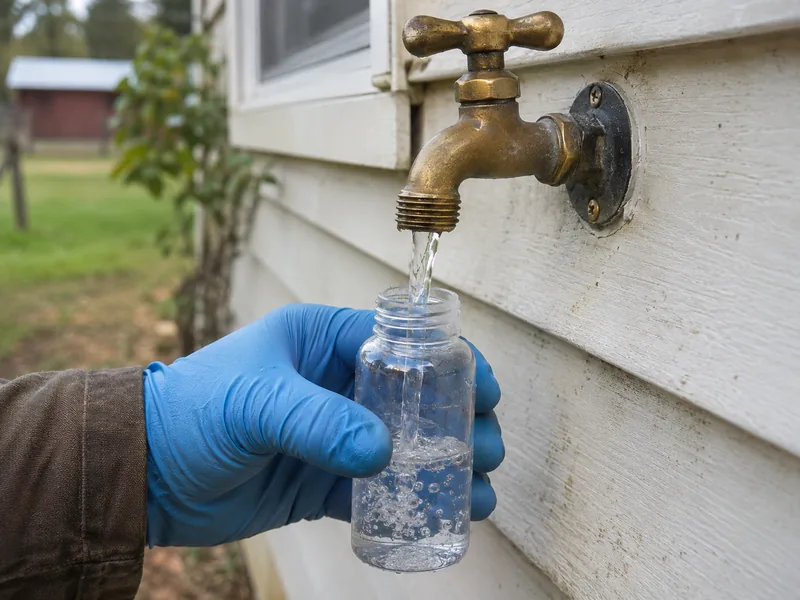
When to shock chlorinate
- Positive coliform testBacteria found in a lab test.
- After floodingFloodwater over the well head.
- After pump workAny time the well is opened.
- Rotten-egg or musty smellSulfur or iron bacteria.
- New or unused wellBefore putting a well into service.
- Damaged well capInsects or animals may have entered.
What our disinfection includes
A trained technician does the work and talks you through it. You get the price in writing before anything is replaced.
Dose calculation
Based on well depth and water volume.
Chlorine and circulation
Casing washed and system circulated.
Treatment bypass
Softeners and filters protected.
Contact time
Chlorine held for the right time.
Flushing
Flushed away from septic and plants.
Follow-up test
Retest to confirm results.
Why bacteria comes back
If bacteria returns after shocking, something is letting it in. Common causes are a loose or vented cap without a screen, a well in a pit, cracked casing, or surface water around the well.
Fixing the entry point is the long-term solution. In some cases, continuous treatment such as a UV system is the best answer. See well water treatment.
How a well shock chlorination visit works
The same four steps on every job, from a quick switch swap to a 600-foot pump pull.
Call or book online
Describe the symptoms. We triage on the phone and load the truck with the parts they point to.
Test before touching
We check voltage, amps, motor resistance, tank charge and flow, and tell you what we find.
Price in writing
You get the diagnosis and a fixed price before we start. If you want to think it over, that is fine.
Fix, flush and verify
Repair completed, well disinfected after any pull, and the system cycled until pressure is steady.
Questions about well shock chlorination
How long after shocking a well can I drink the water?
Not until the chlorine has been flushed out and a follow-up test shows no bacteria.
Can I shock my well myself?
Yes, but correct dosing and circulation matter. Many DIY attempts fail.
How often should a well be shocked?
Only when needed: after a positive test, flooding, or work on the well.
Will shocking damage my pump?
No, when done correctly and flushed properly.
Does shocking fix sulfur smell?
It can help with sulfur bacteria, but hydrogen sulfide in the aquifer may need treatment.
Related work
One worn part often wears out the next. These jobs tend to come up alongside well shock chlorination.
Well Water Treatment
Filters, softeners, UV and iron and sulfur systems chosen from a real water test.
Learn moreWell Inspection for Home Sales
Pre-purchase and pre-listing well inspections: equipment, flow, water quality and a report.
Learn moreWell Rehabilitation
Restore lost yield by cleaning clogged screens and fractures of iron, scale and biofilm.
Learn moreSubmersible Well Pump Repair
Testing, pulling and repairing submersible pumps from shallow wells to 800 feet deep.
Learn moreWell Shock Chlorination near you
Need well shock chlorination?
Tell us what the pump is doing. We will give you a likely cause, a price range and an arrival window on the first call.