Well Pressure Switch Replacement
The pressure switch tells your pump when to run and when to stop. When its contacts burn, its tube clogs or its spring weakens, the pump won't start, won't stop or chatters. A new switch, set correctly, fixes it.
What pressure switch replacement involves
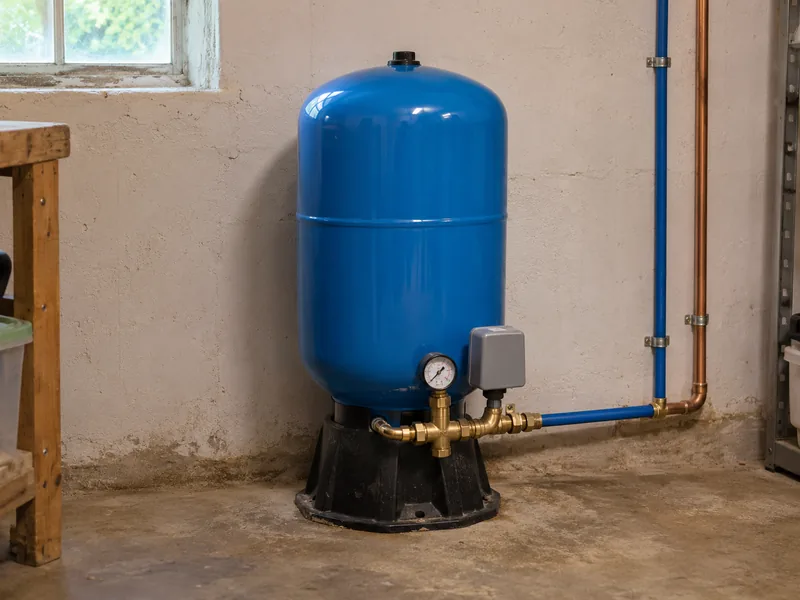
The pressure switch is a small gray box near the pressure tank. Inside, a diaphragm senses water pressure and opens or closes a set of electrical contacts. When pressure drops to the cut-in setting, the contacts close and the pump starts. When it reaches cut-out, they open and the pump stops.
Switches wear out because they switch a lot of current. Every pump start creates a small arc that pits the contacts. Over years, the contacts burn, stick or fail to close. Hard water also clogs the small tube or nipple that connects the switch to the plumbing, so the switch cannot sense pressure correctly.
Replacing a switch is quick, but setting it right matters. The switch, tank air charge and pump capability must match. We set all three together and check the system through several cycles.
Signs of a failing pressure switch
- Pump won't startBurned contacts that no longer close.
- Pump won't stopContacts welded shut or switch set too high for the pump.
- Clicking or chatteringA clogged sensing tube or waterlogged tank.
- Tapping the switch starts the pumpA classic sign of pitted contacts.
- Ants or insects in the switchCommon in warm climates; they short the contacts.
- Rust or water inside the coverCorrosion that will soon cause failure.
What our switch replacement includes
A trained technician does the work and talks you through it. You get the price in writing before anything is replaced.
New pressure switch
Quality 30/50, 40/60 or adjustable switch to match your system.
Clean or new tank tee
Clogged nipples and fittings replaced.
Tank air charge set
Air charge set 2 PSI below the new cut-in.
Low-pressure cutoff option
Switches that shut off if the well runs dry.
Wiring checked
Connections tightened and wire condition checked.
Cycle test
Several cycles watched to confirm correct operation.
Low-pressure cutoff switches
A low-pressure cutoff switch has a lever that shuts the pump off if pressure falls far below cut-in, which usually means the well has run dry or a pipe has broken. It protects the pump from running dry.
The downside is that you must manually reset it. For wells that sometimes run low, it is good insurance. For others, a pump protection device or a constant pressure drive with dry-run protection may be better.
How a pressure switch replacement visit works
The same four steps on every job, from a quick switch swap to a 600-foot pump pull.
Call or book online
Describe the symptoms. We triage on the phone and load the truck with the parts they point to.
Test before touching
We check voltage, amps, motor resistance, tank charge and flow, and tell you what we find.
Price in writing
You get the diagnosis and a fixed price before we start. If you want to think it over, that is fine.
Fix, flush and verify
Repair completed, well disinfected after any pull, and the system cycled until pressure is steady.
Questions about pressure switch replacement
How long does a pressure switch last?
Typically 5 to 15 years, depending on how often the pump cycles and the water quality.
Can I replace a pressure switch myself?
It is a common DIY job for experienced homeowners, but it involves 240 volt wiring and water. Turn off the breaker and verify no voltage before touching it.
What pressure switch setting should I use?
Most homes use 30/50 or 40/60 PSI. The pump must be able to reach the cut-out setting.
Why does my pressure switch chatter?
A clogged sensing tube or a waterlogged pressure tank are the most common causes.
Is a pressure switch the same as a pressure tank?
No. The switch controls the pump; the tank stores water under pressure.
Related work
One worn part often wears out the next. These jobs tend to come up alongside pressure switch replacement.
Pressure Tank Replacement
Waterlogged, leaking or undersized pressure tanks replaced and sized for long pump life.
Learn moreShort Cycling Repair
Pump clicking on and off every few seconds? We stop the cycling before it kills the motor.
Learn moreLow Water Pressure Repair
Weak showers and slow faucets traced to the switch, tank, pump, filters or well.
Learn moreWell Pump Not Working
A step-by-step diagnosis of why the well pump will not turn on, shut off or deliver water.
Learn morePressure Switch Replacement near you
Need pressure switch replacement?
Tell us what the pump is doing. We will give you a likely cause, a price range and an arrival window on the first call.