Shallow Well Jet Pump Repair
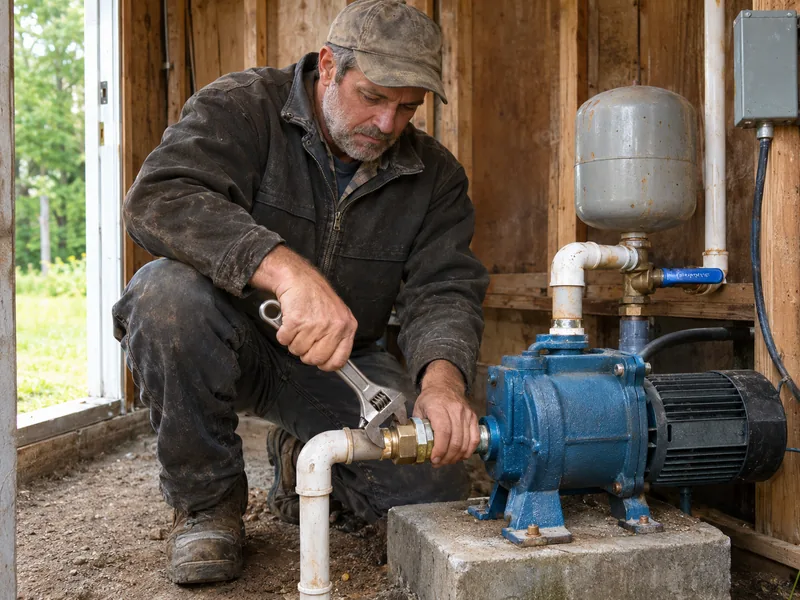
Jet pumps sit above ground, in a basement, crawl space or pump house, and pull water up from the well. When they lose prime, leak or stop building pressure, we find the cause and fix it, usually in one visit.
What shallow well jet pump repair involves
A jet pump uses an impeller and a venturi, or "jet", to create suction that lifts water from the well. Shallow well jet pumps pull water from up to about 25 feet. Convertible or deep well jet pumps use a second pipe and an ejector down in the well to reach 90 feet or so. They are common on older homes, dug and driven wells, lake intakes and shallow irrigation wells.
Jet pumps are easy to reach, which makes them cheaper to service than a submersible. They also have more ways to fail: suction leaks, worn shaft seals, clogged jets and failed foot valves all show up as a pump that runs but cannot hold pressure. The trick is finding which one, because replacing the pump will not fix a leaking suction line.
We pressure-test and vacuum-test the suction side, inspect the impeller, diffuser and jet, check the foot valve and the pressure switch, and look at whether the well level suits a jet pump at all. If the water level has dropped below what a shallow pump can lift, we may recommend converting to a deep well jet or a submersible pump.
Common jet pump problems
- Pump loses primeAir is getting in through a leaky suction pipe or fitting, or the foot valve is not holding.
- Water dripping from the pumpThe shaft seal between the motor and the pump body has worn out.
- Runs but builds no pressureClogged jet, worn impeller or a water level below the pump's lift limit.
- Pump turns on and off rapidlyUsually a waterlogged pressure tank, not the pump itself.
- Loud squealing or grindingWorn motor bearings, often from age or water dripping into the motor.
- Milky or air-filled waterA suction leak is pulling air in with the water.
What our jet pump service includes
A trained technician does the work and talks you through it. You get the price in writing before anything is replaced.
Suction line test
We check for air leaks in the suction pipe, fittings and well seal.
Foot valve and check valve
Inspected and replaced if they let water drain back.
Shaft seal replacement
New mechanical seal and gaskets to stop leaks and protect the motor.
Impeller, diffuser and jet
Cleaned or replaced when worn or clogged with iron and sand.
Pressure switch and gauge
Tested, cleaned or replaced, and pressure settings adjusted.
Priming and run test
Pump primed, run through several cycles and checked for steady pressure.
Shallow well or deep well jet?
A shallow well jet pump has the jet built into the pump body and one pipe running down to the water. It works when the water level is within about 25 feet of the pump. That is close to the physical limit of suction, so even a few feet of drop in a dry season can make a shallow pump lose prime.
A deep well jet pump puts the ejector down in the well with two pipes, one pushing water down and one bringing it up. It can reach much deeper water, but it is less efficient than a submersible. If a deep well jet is on its second or third replacement, a submersible is often the better long-term answer.
How a shallow well jet pump repair visit works
The same four steps on every job, from a quick switch swap to a 600-foot pump pull.
Call or book online
Describe the symptoms. We triage on the phone and load the truck with the parts they point to.
Test before touching
We check voltage, amps, motor resistance, tank charge and flow, and tell you what we find.
Price in writing
You get the diagnosis and a fixed price before we start. If you want to think it over, that is fine.
Fix, flush and verify
Repair completed, well disinfected after any pull, and the system cycled until pressure is steady.
Questions about shallow well jet pump repair
Why does my jet pump keep losing prime?
Air is getting into the suction side, through a leaky fitting, a cracked pipe or a foot valve that does not hold. It can also happen if the water level drops below the pump's lift limit.
How long do jet pumps last?
Typically 8 to 15 years. Seals and bearings may need replacement along the way, and water dripping onto the motor shortens its life.
Can I prime the pump myself?
Yes. Turn off power, remove the priming plug, fill the pump and suction pipe with water, replace the plug and restore power. If it loses prime again within a day or two, there is a leak to fix.
Is a jet pump or a submersible better?
For shallow wells under 25 feet, a jet pump is simple and affordable. For deeper drilled wells, a submersible is quieter, more efficient and lasts longer.
Do you service lake and irrigation jet pumps?
Yes. Many lake intakes and shallow irrigation wells use jet or centrifugal pumps, and we service both.
Related work
One worn part often wears out the next. These jobs tend to come up alongside shallow well jet pump repair.
Check & Foot Valve Replacement
Leaking check valves and foot valves replaced to stop water hammer and pressure loss.
Learn morePressure Tank Replacement
Waterlogged, leaking or undersized pressure tanks replaced and sized for long pump life.
Learn moreIrrigation Well Pump Repair
Lawn and garden irrigation pumps: centrifugal, jet and submersible, plus pump start relays.
Learn moreWell Pump Replacement
Worn-out pumps replaced with a correctly sized submersible or jet pump, wire and fittings.
Learn moreShallow Well Jet Pump Repair near you
Need shallow well jet pump repair?
Tell us what the pump is doing. We will give you a likely cause, a price range and an arrival window on the first call.