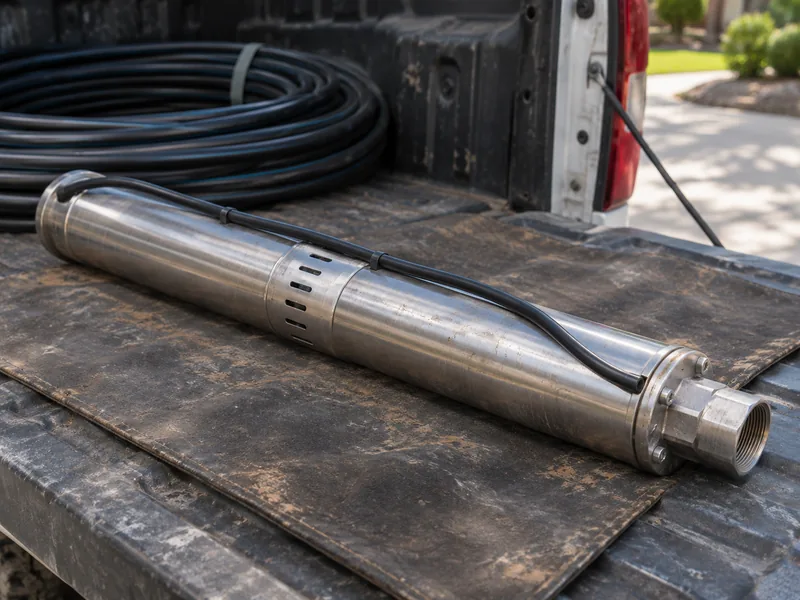
Step 1: Read the well log
The driller's log gives total depth, static water level and an estimated yield in gallons per minute. These numbers decide the pump.
Step 2: Size the pump
Sizing uses total dynamic head (lift + friction + pressure setting) and flow (gallons per minute the house needs). The pump must not exceed the well's yield, or it will draw the well down to the intake.
Step 3: Install the pitless adapter
A pitless adapter lets the water line leave the casing below the frost line and keeps the well sealed. It replaces old well pits, which flood and let in bacteria.
Step 4: Set the pump
The pump goes down on pipe with a torque arrestor, safety rope and wire sized for voltage drop. It is set above the bottom of the well to avoid sediment.
Step 5: Pressure tank and controls
A pressure tank sized for at least one to two minutes of pump run time, a switch, gauge, relief valve and, for three-wire pumps, a control box. A constant pressure system is an alternative.
Step 6: Disinfect and test
The well is shock chlorinated, flushed and tested. Many areas require a bacteria test before occupancy.
| Item | Typical cost |
|---|---|
| Complete pump system, shallow well | $2,500 – $4,500 |
| Complete pump system, deep well | $3,500 – $8,000 |
| Trenching per 100 ft | $600 – $1,500 |
| Water test | $75 – $300 |