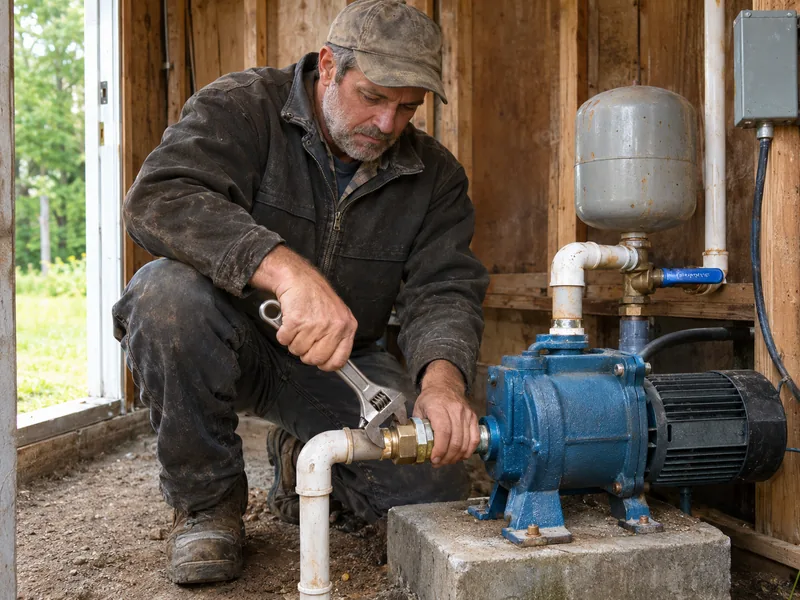
In brief: A shallow well jet pump sits above ground and uses suction to lift water from up to about 25 feet. The most common problems are lost prime from suction leaks or a bad foot valve, worn shaft seals and clogged jets. If the water level drops below 25 feet, a deep well jet or a submersible is needed.
How a shallow well jet pump works
A motor spins an impeller that pushes water through a narrow nozzle, the jet. That creates low pressure that draws more water up the suction pipe. Because it relies on suction, it is limited by atmospheric pressure to about 25 feet of practical lift.
Where they are used
- Shallow dug and driven wells
- Lake and pond intakes
- Irrigation wells in sandy coastal areas
- Older homes with the pump in a basement or pump house
Common problems
| Problem | Likely cause |
|---|---|
| Loses prime | Suction leak or foot valve not holding |
| Water dripping from pump | Worn shaft seal |
| Runs, no pressure | Clogged jet or water below lift limit |
| Short cycling | Waterlogged pressure tank |
| Grinding noise | Worn motor bearings |
How to prime a jet pump
- Turn off the power.
- Remove the priming plug on top of the pump.
- Fill the pump and suction pipe with water until full.
- Replace the plug and restore power.
- If it loses prime again within a day or two, there is a leak to fix.
When to switch to a submersible
If your water level has dropped, or the well is a drilled well deeper than 25 feet, a submersible pump is quieter, more efficient and longer lasting. For fixes, see shallow well jet pump repair.